
Introduction
When I first started hearing people talk about artificial intelligence, I honestly thought it was something only big technology companies could afford. It sounded complicated, expensive, and far away from everyday business. Over time, I realized I was completely wrong. The more I explored the business world, the more I noticed that AI was quietly becoming part of almost everything. Whether it was customer service, marketing, accounting, or product recommendations, AI was working behind the scenes.
From my experience, the biggest surprise was not how powerful AI is but how accessible it has become. Small businesses, freelancers, online stores, and even local service providers are finding ways to use AI without spending a fortune. It has changed how people work, communicate, and make decisions. Instead of replacing human effort, I have seen AI become a tool that helps people focus on more important tasks while reducing repetitive work.
In this article, I want to share my thoughts and observations about how AI is transforming modern businesses and why I believe every business owner should understand its potential.
AI Has Changed the Way Businesses Make Decisions
One of the biggest changes I have noticed is how businesses make decisions today. In the past, many decisions were based on guesswork or personal experience. While experience is still valuable, AI has introduced something even more powerful, which is data driven decision making.
Businesses now collect information from websites, social media, customer purchases, surveys, and many other sources. AI can analyze all this information in minutes and identify patterns that humans might never notice. Instead of spending days reviewing reports, business owners can quickly understand what customers like, which products are selling well, and where improvements are needed.
I think this has made businesses much smarter. Rather than relying on assumptions, they can make decisions based on facts. This reduces mistakes and increases confidence in future planning.
Improving Customer Service
Customer service has changed dramatically because of AI. I remember waiting several days to receive responses from businesses through email. Today, many companies reply instantly using AI powered chat assistants.
These virtual assistants answer common questions, guide customers through websites, and even help with purchases. While they may not solve every problem, they handle routine questions efficiently, allowing human representatives to focus on more complex situations.
As a customer, I appreciate getting quick answers without waiting for business hours. As someone interested in business, I can also see how much time and money companies save by automating repetitive conversations.
The best businesses combine AI with human support. AI handles the simple tasks while real people provide empathy and personalized assistance when necessary. This combination creates a better customer experience.
Smarter Marketing Strategies
Marketing is another area where AI has completely changed the game. I have seen businesses create better campaigns by understanding exactly what their audience wants.
AI studies customer behavior, browsing history, shopping habits, and preferences. Based on this information, businesses can send personalized emails, recommend relevant products, and display advertisements that are more likely to attract attention.
Instead of showing the same advertisement to everyone, companies now create personalized experiences for different groups of customers. This makes marketing feel more relevant and less intrusive.
I also find it impressive that AI helps businesses predict which marketing strategies are likely to succeed before spending large amounts of money. This allows companies to use their budgets more wisely and achieve better results.
Faster Content Creation
Creating content used to require hours of research and writing. Today, AI helps businesses produce blog posts, product descriptions, email campaigns, social media captions, and marketing ideas much faster.
From my own experience, AI is an excellent assistant during the writing process. It helps organize ideas, improve grammar, and generate fresh inspiration. However, I have also learned that human creativity is still essential.
Readers connect with stories, emotions, and personal experiences. AI can support content creation, but genuine human perspectives make articles feel authentic and trustworthy.
Businesses that combine AI efficiency with human creativity often produce the most engaging content.
Better Financial Management
Managing finances is one of the most challenging parts of running a business. AI has made this process much easier.
Modern accounting software uses AI to organize expenses, categorize transactions, generate financial reports, and even detect unusual spending patterns. This reduces human errors and helps business owners understand their financial situation more clearly.
I think one of the greatest benefits is forecasting. AI analyzes previous financial records and predicts future trends. Business owners can prepare for seasonal changes, estimate future revenue, and plan investments with greater confidence.
Although financial experts remain important, AI provides valuable insights that support better financial planning.
Enhancing Employee Productivity
Every business wants employees to work efficiently without feeling overwhelmed. AI helps achieve this balance by automating repetitive tasks.
Instead of spending hours entering data, organizing files, scheduling meetings, or preparing reports, employees can use AI tools to complete these activities much faster.
From what I have observed, this does not make employees less valuable. It actually allows them to spend more time solving problems, developing creative ideas, and building stronger relationships with customers.
People perform best when they focus on meaningful work instead of repetitive administrative tasks. AI makes that possible.
Personalized Customer Experiences
One thing I truly admire about AI is its ability to create personalized experiences.
Whenever I shop online, I often notice product recommendations that match my interests surprisingly well. Streaming platforms recommend movies I actually enjoy. Music applications suggest songs that fit my taste.
Behind these experiences is AI analyzing previous interactions and learning customer preferences.
Businesses use similar technology to recommend products, personalize websites, and create customized offers for individual customers.
This level of personalization makes customers feel understood rather than treated as just another number.
Better Inventory Management
Businesses that sell physical products face the challenge of managing inventory. Having too much stock wastes money, while having too little can disappoint customers.
AI helps solve this problem by analyzing sales history, seasonal demand, market trends, and customer behavior.
Instead of relying on rough estimates, businesses can predict future demand more accurately. This reduces waste, prevents shortages, and improves overall efficiency.
I believe this is especially valuable for small businesses that cannot afford costly inventory mistakes.
Improving Recruitment
Hiring the right employees takes time and effort. AI has simplified many parts of the recruitment process.
Companies now use AI to screen resumes, identify qualified candidates, schedule interviews, and evaluate applicant skills.
This allows recruiters to focus more on interviewing and understanding candidates rather than manually reviewing hundreds of applications.
Of course, hiring should never depend entirely on AI because personality, communication skills, and cultural fit are difficult for technology to measure completely.
The best hiring decisions combine AI analysis with human judgment.
Stronger Cybersecurity
As businesses become more digital, cybersecurity has become increasingly important.
AI plays a major role in protecting businesses from online threats. It continuously monitors systems, identifies unusual activity, detects suspicious login attempts, and alerts security teams before problems become serious.
Traditional security systems often react after an attack occurs. AI can recognize patterns that indicate potential threats much earlier.
I think this proactive approach is becoming essential because cyber attacks continue to grow more sophisticated every year.

Improving Supply Chain Management
Supply chains involve many moving parts including suppliers, transportation, warehouses, and deliveries.
AI helps businesses monitor every stage of the process. It predicts delays, identifies potential disruptions, and recommends alternative solutions before problems affect customers.
During recent years, many companies experienced supply chain challenges. Businesses using AI were often able to respond faster because they had better visibility into their operations.
This demonstrates how technology can improve resilience during uncertain times.
Supporting Small Businesses
Many people assume AI only benefits large corporations. My experience tells a different story.
Today, affordable AI tools allow small businesses to compete more effectively. Local stores use AI for social media management, appointment scheduling, customer communication, and online advertising.
Freelancers use AI to organize projects, improve productivity, and create professional content.
Small businesses may not have large teams, but AI gives them access to capabilities that were once available only to major companies.
This creates new opportunities for growth without requiring huge investments.
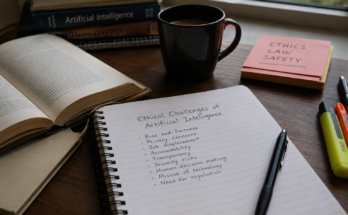
Challenges Businesses Should Consider
Although AI offers incredible advantages, it also comes with challenges.
Businesses must protect customer privacy and use data responsibly. They also need to verify AI generated information because mistakes can happen.
Employees should receive proper training to use AI effectively instead of depending on it blindly.
Another important challenge is maintaining the human element. Customers still value genuine conversations, empathy, and personal relationships.
I believe AI should support people rather than replace them. Businesses that remember this principle will build stronger customer trust.
The Future of AI in Business
Looking ahead, I believe AI will become even more integrated into daily business operations.
Future AI systems will understand customer needs more accurately, automate increasingly complex tasks, and provide deeper business insights.
We will likely see smarter virtual assistants, more advanced business analytics, improved healthcare solutions, better educational tools, and highly personalized shopping experiences.
Businesses that continue learning and adapting will be better prepared for these changes.
Rather than fearing AI, I think it makes more sense to understand it and discover practical ways to use it responsibly.
My Personal Thoughts
After spending time learning about artificial intelligence and watching businesses adopt it, I no longer see AI as something futuristic. I see it as a practical tool that is already improving everyday work.
What impresses me the most is not that AI works faster than humans but that it allows humans to focus on the things they do best. Creativity, empathy, leadership, and critical thinking remain uniquely human strengths.
Whenever I see a business using AI successfully, I notice that technology is supporting people instead of replacing them. Employees become more productive, customers receive better service, and business owners make smarter decisions.
I believe the businesses that will succeed in the coming years are not necessarily those with the biggest budgets but those willing to learn, adapt, and use AI thoughtfully.
Conclusion
Artificial intelligence is transforming modern businesses in ways that once seemed impossible. It helps companies improve customer service, create personalized experiences, strengthen cybersecurity, manage finances, optimize inventory, enhance marketing, and increase productivity.
From my perspective, AI is not just another technology trend. It represents a new way of working that combines human intelligence with powerful digital tools. Businesses of every size now have opportunities to improve efficiency and deliver greater value to their customers.
At the same time, success with AI depends on responsible use. Technology should never replace honesty, creativity, or meaningful human connections. Instead, it should help people achieve more while maintaining the qualities that make businesses trustworthy.
As AI continues to evolve, I believe the most successful businesses will be those that embrace innovation while keeping people at the center of every decision. That balance between technology and humanity is what will shape the future of modern business.