Introduction
When I first started learning programming, I made the same mistake that many beginners make. I spent more time trying to choose the perfect programming language than actually writing code. Every website, YouTube video, and online forum had a different opinion. Some people said Python was the future, while others believed JavaScript was all anyone needed. After spending time learning multiple languages and working on different projects, I realized that there is no single language that is perfect for everyone.
The best programming language depends on what you want to build and where you see your career going. In 2026, technology continues to grow at an incredible pace. Artificial intelligence, cloud computing, mobile applications, cybersecurity, and web development are creating thousands of new opportunities for developers around the world. Because of this, learning the right programming language can open many exciting career paths.
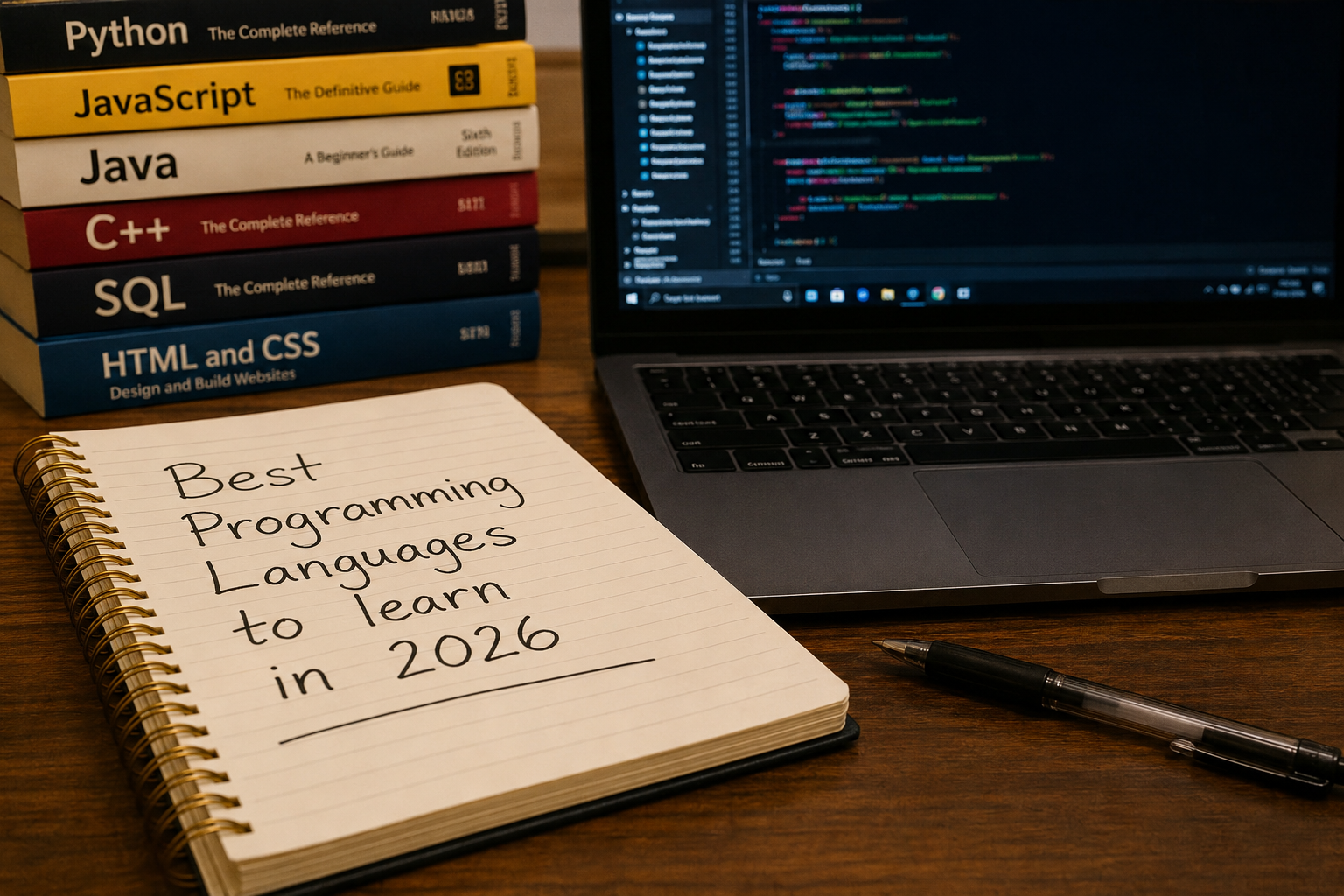
In this article, I want to share the programming languages that I believe are worth learning in 2026. These recommendations are based on real industry demand, ease of learning, community support, and long term career opportunities.
Why Choosing the Right Programming Language Matters
When I learned my first programming language, I thought I would need to memorize every syntax rule perfectly. Later, I discovered that programming is actually about solving problems. Languages are simply tools that help us create solutions.
Choosing a language with strong community support and modern applications makes learning much easier. It also increases your chances of finding tutorials, online courses, job opportunities, and people who can help when you get stuck.
Another important reason is career growth. Companies constantly search for developers with skills in popular programming languages. Learning one of these languages today can make you more valuable in the job market tomorrow.
Python
If someone asked me to recommend only one programming language for beginners in 2026, my answer would still be Python.
Python has an incredibly clean and readable syntax. Even people with no programming background can understand basic Python code after only a few days of practice.
One reason I enjoy working with Python is its versatility. I have used it for automation, web development, data analysis, artificial intelligence, and small personal projects. Instead of learning different languages for every task, Python allows you to explore many different fields.
Artificial intelligence continues to grow rapidly, and Python remains the leading language for machine learning and data science. Popular libraries make complex tasks much easier, allowing developers to build powerful applications without writing thousands of lines of code.
Python is also supported by one of the largest programming communities in the world. Whenever I encountered an error, I usually found a solution within minutes because someone else had already faced the same problem.
JavaScript
JavaScript is another language that I believe every developer should learn.
The first website I built was simple, but adding JavaScript completely changed how users interacted with it. Buttons became clickable, forms could validate information instantly, and pages felt much more dynamic.
Today, JavaScript powers millions of websites across the internet. It is no longer limited to front end development. Modern frameworks and runtime environments allow developers to build complete applications using JavaScript from start to finish.
Learning JavaScript gives you opportunities in front end development, back end development, desktop applications, browser extensions, and even mobile app development.
Another advantage is the massive ecosystem surrounding JavaScript. New tools appear regularly, making development faster and more efficient.
TypeScript
After becoming comfortable with JavaScript, I eventually started learning TypeScript. At first, I wondered why another version of JavaScript even existed. After working on larger projects, I understood its value.
TypeScript helps developers write safer and more organized code. It catches many mistakes before the application even runs, reducing debugging time and improving overall code quality.
Many modern companies now prefer TypeScript for large projects because it makes collaboration easier among teams.
If you plan to become a professional web developer, learning TypeScript after JavaScript is one of the smartest investments you can make.
Java
Although Java has existed for decades, it continues to be one of the most reliable programming languages in the software industry.
Many banking systems, business applications, enterprise software, and Android applications still depend heavily on Java.
When I explored enterprise development, I noticed that Java projects were often well structured and built for long term stability. Large companies continue investing in Java because of its security, reliability, and performance.
Java also has excellent career opportunities since many organizations maintain existing applications while developing new software using modern Java frameworks.
C Sharp
C Sharp has become one of my favorite languages for building Windows applications and game development.
Developed by Microsoft, C Sharp offers a clean syntax and powerful features. Many beginners find it easier than languages like C++ while still being capable of building professional software.
One exciting area where C Sharp shines is game development. The Unity game engine allows developers to create games for computers, consoles, and mobile devices using C Sharp.
If game development interests you, learning C Sharp is definitely worth considering in 2026.
Go
Go, also called Golang, continues gaining popularity among software engineers working with cloud computing and distributed systems.
The first thing I noticed about Go was its simplicity. The language avoids unnecessary complexity while offering excellent performance.
Many modern cloud platforms, networking tools, and backend services use Go because it handles concurrent tasks efficiently.
Companies building scalable web services increasingly choose Go due to its speed and ease of deployment.
If your goal is cloud engineering, backend development, or DevOps, Go deserves a place on your learning list.
Rust
Rust is one of the fastest growing programming languages today.
At first, Rust looked difficult compared to Python or JavaScript. However, after understanding its memory management system, I realized why so many developers praise it.
Rust focuses heavily on performance, reliability, and safety. It helps prevent many common programming errors that often lead to security vulnerabilities.
Many companies developing operating systems, browsers, embedded software, and high performance applications are adopting Rust.
Although it requires patience to learn, the long term benefits make the effort worthwhile.
Kotlin
For Android development, Kotlin continues to be one of the best choices in 2026.
Google officially supports Kotlin, and many modern Android applications use it instead of Java.
I appreciate Kotlin because it reduces unnecessary code while improving readability. Features that require many lines in Java can often be written much more simply in Kotlin.
If your dream is building Android applications, Kotlin should be your primary focus.
Swift
Anyone interested in developing applications for Apple devices should consider learning Swift.
Swift makes it easier to create applications for iPhone, iPad, Mac, Apple Watch, and Apple TV.
Compared to older Apple programming languages, Swift offers cleaner syntax, improved performance, and modern development features.
As Apple’s ecosystem continues expanding, skilled Swift developers remain in high demand.
C Plus Plus
Despite being one of the oldest programming languages, C++ continues to play an important role.
Whenever high performance is required, C++ often becomes the preferred choice. It is widely used in operating systems, game engines, financial software, robotics, and embedded devices.
Learning C++ also improves your understanding of memory management and computer architecture.
Although beginners may find it challenging, mastering C++ builds a strong programming foundation that makes learning other languages easier.
SQL
Many people forget that databases are equally important as programming languages.
Every application stores information somewhere, whether it is user accounts, products, transactions, or messages.
SQL allows developers to retrieve, update, organize, and analyze data efficiently.
During my projects, I quickly realized that understanding databases significantly improved my development skills. Even if your primary language is Python or JavaScript, learning SQL is extremely valuable.
Which Language Should Beginners Learn First
People often ask me which language they should start with.
If your goal is general programming, automation, artificial intelligence, or data science, I recommend starting with Python.
If you want to build websites, begin with HTML, CSS, and JavaScript before moving to TypeScript.
For Android development, choose Kotlin.
For Apple application development, learn Swift.
If you want enterprise software development, Java is an excellent choice.
If gaming interests you, C Sharp provides a great starting point.
The most important thing is choosing one language and sticking with it long enough to build real projects.
Tips That Helped Me Learn Programming Faster
Over time, I discovered that consistency matters more than intelligence.
Instead of watching endless tutorials, I started writing code every day. Even small projects taught me more than hours of passive learning.
Reading other people’s code also helped me understand better programming practices.
Whenever I encountered an error, I resisted copying the solution immediately. Trying to solve the problem myself improved my logical thinking.
Building personal projects made learning much more enjoyable. Whether it was a calculator, portfolio website, expense tracker, or simple game, every project increased my confidence.
Joining developer communities also made a huge difference. Seeing how experienced developers solve problems taught me techniques that books rarely explain.
Future Trends in Programming
Technology is evolving rapidly, and programming languages continue adapting to new demands.
Artificial intelligence will keep driving demand for Python developers.
Cloud computing will increase opportunities for Go and Rust developers.
Web applications will continue relying heavily on JavaScript and TypeScript.
Mobile development will remain strong with Kotlin and Swift.
Cybersecurity, automation, robotics, and data science will create new career paths for developers willing to continuously learn.
The good news is that once you master one programming language, learning additional languages becomes much easier because the core programming concepts remain similar.
Final Thoughts
Looking back at my programming journey, I realize that choosing the perfect language was never as important as simply getting started. Every programming language taught me something valuable, whether it was writing cleaner code, solving problems more efficiently, or understanding how software works behind the scenes.
In 2026, the opportunities for programmers are greater than ever. Businesses of every size depend on software, websites, mobile applications, cloud services, and artificial intelligence to grow. That means skilled developers will continue to be in demand across many industries.
If I were starting from scratch today, I would begin with Python or JavaScript because both offer incredible flexibility and countless learning resources. From there, I would gradually specialize based on my interests, whether that meant artificial intelligence, web development, mobile apps, cloud computing, cybersecurity, or game development.
Remember that success in programming does not come from knowing ten different languages. It comes from mastering the fundamentals, building real projects, staying curious, and practicing consistently. The language you choose today is simply the beginning of a much larger and more rewarding journey. With dedication and regular practice, you can develop the skills needed to succeed in the fast changing world of technology.